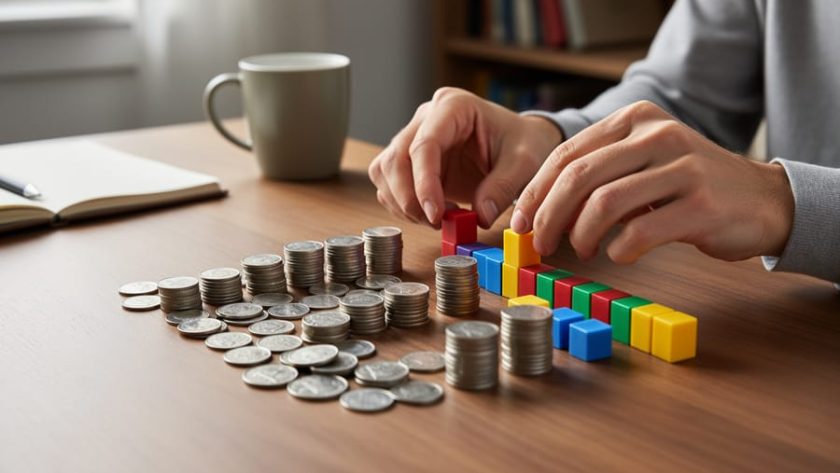
Place value is the foundation of our number system, and you can learn or teach it effectively using hands-on materials like base-ten blocks, bundling sticks, or even everyday items like beans and cups. Whether you’re an adult learner building your own math confidence or an educator guiding others, the key is making the abstract concept concrete: understanding that the digit 7 in 372 represents 70, not just 7, because its position gives it meaning.
Many adults struggle with place value simply because they memorized procedures without grasping why numbers work the way they do. When you can physically group ten ones into a ten, or exchange ten tens for a hundred, the logic clicks. This understanding transforms everything from basic addition to reading large numbers on bills or paychecks.
This guide provides clear, numbered steps for both audiences. Adult learners will find a self-directed path to master place value using free Canadian resources and simple materials you likely have at home. Educators will discover practical methods to teach these same concepts, complete with tips to avoid common mistakes that trip up learners. You’ll learn which tools work best, how to verify understanding at each stage, and how to connect place value to real situations like reading price tags or measuring distances. By working through concrete examples and building up from ones to thousands, place value stops being a mystery and becomes a skill you can use with confidence.
What You Need to Teach or Learn Place Value
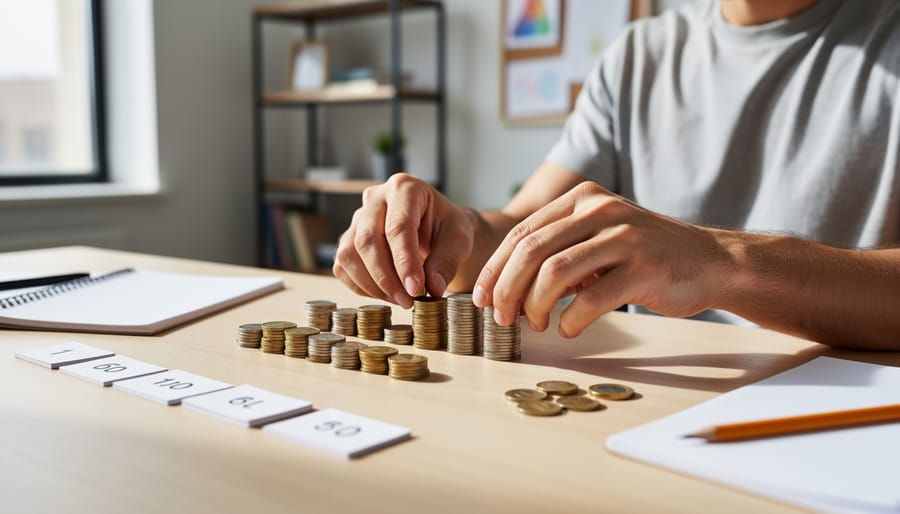
You’ll need a few simple materials to start learning or teaching place value. Most can be found at home or downloaded for free from Canadian education websites. The key is having hands-on items you can touch, move, and group together.
Physical manipulatives work best for building understanding. Base-ten blocks are ideal because they show the size relationship between ones, tens, and hundreds. If you don’t have blocks, use everyday objects instead. Pennies work well because ten pennies equal one dime, reinforcing the grouping concept. Dried beans, buttons, pasta pieces, or small candies also work. You’ll need at least 100 small objects to practice building two-digit and three-digit numbers.
A place value chart is essential. This simple grid has columns labeled “hundreds,” “tens,” and “ones” where you place your objects or write digits. Adult learners can draw their own chart on paper with three columns. Educators and self-learners alike can print free charts from Canadian sites like, which offers resources for various learning levels.
Here’s what you should gather:
- Base-ten blocks or 100+ small objects (coins, beans, counters)
- Place value charts (drawn or printed)
- Paper and pencil for writing numbers
- Small containers or cups for grouping objects into tens
- Ruler or tape for creating your own charts
For free downloadable materials, check Resource Bank’s Manipulatives page, which includes how-to videos and activity sheets showing exactly how to use these tools. Curriculum Services SD91 also provides place-value classroom resources that can be filtered by topic and type.
Whether you’re learning independently or teaching others, start with what you have. A pencil, paper, and a handful of coins are enough to begin understanding how our number system works.
Before You Start: Understanding What Can Go Wrong
Before you begin learning or teaching place value, understand that the most common frustrations come from a few predictable missteps. If you’re an adult learner working on your own, jumping straight to paper-and-pencil problems before you’ve spent time physically grouping objects will leave you confused and discouraged. You need to see and touch groups of ten first. Educators often make the same error by rushing students to worksheets too quickly, assuming that showing a chart once is enough.
Another trap is using numbers that are too large too soon. If you’re still shaky on what 23 means, tackling 478 will overwhelm you. Adult learners should stick with two-digit numbers until grouping them feels automatic. Educators, watch for signs that a learner needs more practice at the current level before advancing: hesitation, frequent recounting, or relying on finger counting for numbers above ten.
Finally, never assume understanding without checking. If you’re learning on your own, test yourself: can you build the number 34 with objects? Can you explain what the 3 represents? If you’re teaching, ask the learner to show you, not just tell you. Silent nodding often masks confusion, and catching misunderstandings early prevents frustration later.
Step-by-Step: How to Teach and Learn Place Value
Start with Groups of Ten
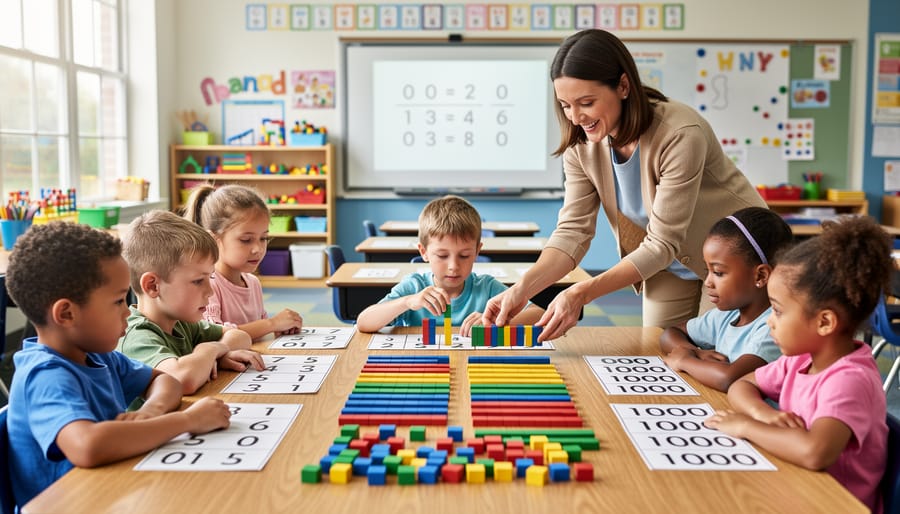
Gather ten small objects you can hold in your hand: coins, dried beans, buttons, or wrapped candies work well. Start by placing them in a row on a table. Now count them out loud, touching each one as you say its number. Next, push them into one tight group and say “ten.” This is how you begin to see ten as a single unit, not just individual items.
If you’re learning on your own, practice this several times with different objects. Group ten pennies, then ten beans, then ten buttons. Feel how ten separate things become one group of ten. If you’re teaching someone else, demonstrate first with manipulatives like counters or base-ten blocks, then let them try. Watch quietly as they group their own set of ten. This hands-on step builds the foundation for understanding that numbers work in groups.
For educators working with adults who seem hesitant to participate, offering familiar objects like coins can get through to reserved adults more easily than classroom materials. Once you’re comfortable grouping ten objects, try making two groups of ten, then three. Count by tens: ten, twenty, thirty. This rhythm will make reading larger numbers much easier later.
Introduce the Place Value Chart
A place value chart is a simple grid that helps you see what each digit in a number represents. The chart has columns labeled from right to left: ones, tens, hundreds (and you can add thousands later if needed). Each column shows the value of the digit sitting in that spot.
If you’re learning on your own, grab a piece of paper and draw three columns. Write “Ones” at the top of the right column, “Tens” in the middle, and “Hundreds” on the left. You can also find free printable charts online at sites like Curriculum Services SD91, where you can filter resources by topic and download what you need.
To use the chart, place counters or draw dots in each column to build a number. For example, to show 34, put three counters in the tens column and four in the ones column. The chart makes it obvious that the 3 actually means thirty, not just three.
If you’re teaching someone else, the same approach works. Use a large chart on paper or a whiteboard so learners can see it clearly. Have them place physical objects in each column while you guide them through building numbers together.
Practice Building Numbers
Pick a two-digit number to practice, such as 23 or 56. If you’re an adult learner working alone, say the number out loud and decide how many tens and ones it has: 23 is two tens and three ones. Place two objects in the tens column of your chart and three objects in the ones column. If you’re an educator, ask your learner to choose a number, then guide them to build it using manipulatives.
Once two-digit numbers feel comfortable, move to three-digit numbers like 142. Break it down: one hundred, four tens, two ones. Use a hundred flat or ten groups of ten for the hundreds place, four objects in the tens column, and two in the ones. Adult learners can practice with household items; educators can bring in coins or counters. Start simple and only increase complexity when you can build several numbers correctly without hesitation.
Connect Objects to Written Numbers
Once you’ve built a number with your objects and placed them in the correct columns, write that number on paper next to your chart. Look at both at the same time: the physical groups in your chart and the written numeral you just wrote.
Say the number out loud while pointing to each part. For example, if you’ve made 23 with two groups of ten and three single objects, point to the tens column and say “two tens,” then point to the ones column and say “three ones,” then say the complete number: “twenty-three.” This connects what you see with your hands to what you read on paper.
Adult learners working independently should practice this with five different numbers, writing each one down and saying it aloud. Educators teaching others can model this process first, then have learners do it themselves while you observe. Repeat this matching exercise until you or your learners can confidently move between the physical representation and the written form without hesitation.
Learn to Read Each Place
Once you can match the physical objects or chart to a written number, the next step is learning what each digit actually means. This is where place value truly clicks.
Pick any two-digit number, like 47. Point to the 4 and ask yourself: what does this digit mean? It’s not just “four.” Because it sits in the tens place, it means four tens, or 40. Now point to the 7. It sits in the ones place, so it means seven ones, or just 7. Put them together, and you have 40 plus 7, which equals 47.
If you’re learning on your own, try this: write down a number like 63. Say out loud, “The 6 means six tens, or 60. The 3 means three ones, or 3.” Then add them: 60 plus 3 equals 63. Repeat with different numbers until it feels automatic.
If you’re teaching someone else, have them point to each digit and tell you what it means before saying the whole number. This simple act of naming each place reinforces understanding far better than just reading the number aloud.
Practice with Real-Life Examples

Once you’re comfortable with place value charts and building numbers, it’s time to see how this skill works in everyday life. Both adult learners practicing on their own and educators guiding others benefit from real materials you can touch and use.
If you’re learning independently, gather some of your own bills, receipts, or coins. Look at a grocery receipt and identify the place value in the total: if it says $47.23, the 4 represents four tens (or forty dollars), the 7 represents seven ones (or seven dollars). Count out coins to match that amount, four $10 bills and seven $1 coins, and see how the written number connects to actual money. This hands-on practice builds family financial literacy and confidence with numbers you handle daily.
Educators can bring similar materials into a session: print out sample invoices, show addresses (like 482 Main Street, where the 4 means four hundreds, the 8 means eight tens), or use measuring cups to explore place value in recipes. Ask learners to read the numbers aloud and explain what each digit means. Real-world examples make place value meaningful rather than abstract, whether you’re teaching yourself or guiding someone else.
Work Up to Larger Numbers
Once you’re comfortable with tens and ones, add the hundreds place using the same hands-on method. Build numbers like 237 with your blocks or objects: two groups of hundred, three groups of ten, seven ones. Adult learners can practice independently with household items like dried beans grouped in cups. Educators should let learners physically build several three-digit numbers before moving on. Only introduce thousands once hundreds feel solid, rushing causes confusion and discouragement for both independent learners and classroom students.
How to Know You’re Ready to Move Forward
You’re ready to move forward when you can consistently do three things: build any two or three-digit number using objects or drawings, explain what each digit represents, and use place value to solve real problems. For adult learners working independently, try these simple tests on yourself. Can you take twelve pennies, group them into one ten and two ones, and show that on a place value chart? Can you look at the number 83 and say “eight tens and three ones” without hesitation? Can you explain why 52 is larger than 25 by pointing to the tens place? If you can do all three, you’ve built a solid foundation.
Educators should look for the same markers when assessing learners. Ask your student to represent 46 using counters or base-ten blocks while you watch. Have them write down a number you say aloud, then ask “What does the 4 mean in this number?” A learner who can answer accurately and build the number correctly has grasped the core concept. Try a comparison task: “Which is more, 37 or 73, and how do you know?” Someone ready to advance will reference the tens place without prompting.
If any test feels difficult, that’s your signal to practice that specific skill for a few more days. There’s no rush. Go back to the step where confusion started, use different objects or examples, and build confidence through repetition. When these checks feel easy and automatic, you’re ready to explore hundreds, work with larger numbers, or tackle addition and subtraction with regrouping.
For continued practice, revisit the free resources mentioned throughout this guide. offers worksheets at different levels, and Resource Bank’s Manipulatives page provides activity sheets you can download and repeat as many times as needed. Practice regularly, even just ten minutes a day, and you’ll notice steady progress.
Free Canadian Resources to Support Your Learning
Several Canadian organizations offer free materials to support place value learning, whether you’re studying independently or teaching others. provides resources across early years and primary levels, helpful for both adult learners brushing up on fundamentals and educators seeking teaching materials. Their platform includes printable worksheets, visual aids, and activity guides you can access at no cost.
Resource Bank’s Manipulatives page is particularly valuable, offering how-to videos that demonstrate techniques you can follow along with at home or use in a classroom setting. The page includes downloadable activity sheets and answers common questions about using physical tools effectively. This makes it easier for adult learners to understand hands-on approaches and for educators to introduce manipulatives confidently.
Curriculum Services SD91 maintains a Classroom Resources page where you can filter materials by topic and type. While designed for classroom use, many resources work well for self-directed study, especially when paired with J learning methods that emphasize active practice.
Some international resources following England’s National Curriculum may also prove useful, though Canadian-focused materials better reflect the context and examples you’ll encounter in daily life here.
Common Questions About Teaching Place Value
How long does it take to learn place value?
Most adult learners grasp the basics in two to four weeks with regular practice of 15 to 20 minutes a few times a week. Educators should expect similar timelines when teaching adults, though individual progress varies based on prior math experience and confidence.
What if I don’t have manipulatives?
You can use everyday items like coins, beans, buttons, or dried pasta to group and count. Draw a simple place value chart on paper, and represent tens and ones with whatever small objects you have at home.
Can I learn place value on my own as an adult?
Yes, you can learn independently by following the step-by-step process with hands-on materials and checking your understanding as you go. The free resources mentioned throughout this article provide worksheets and visual guides for self-directed learning.
How do I help someone who’s stuck?
Go back to the concrete stage with physical objects and work through grouping and counting together. Watch for specific confusion points, such as reading digits from left to right or understanding that position changes a digit’s value, and address those directly with more hands-on examples.
Is place value important for daily life?
Understanding place value helps you read addresses, handle money confidently, understand measurements, and make sense of numbers at work or in official documents. It builds the foundation for everyday tasks like budgeting, comparing prices, or following recipes with measurements.
How can I keep practicing after I learn the basics?
Use place value skills in real situations like sorting change, reading utility bills, or comparing product weights at the store. Regular practice with these everyday numbers helps reinforce understanding and prevent summer slides or skill loss during breaks from formal learning.
These questions reflect concerns from both adult learners working independently and educators supporting others. The answers stay practical and point back to the hands-on methods described earlier in the article. Whether you’re learning for yourself or teaching someone else, remember that confusion is normal and progress comes from repeated practice with real objects and real-world numbers.
Learning place value is within reach for everyone, whether you’re an adult learner building your own math confidence or an educator supporting others on their journey. The key is consistent, hands-on practice with concrete materials before moving to abstract numbers. For adult learners, set aside short practice sessions several times a week using everyday objects like coins or buttons to reinforce each concept. For educators, remember that patience and repetition with manipulatives matter more than speed through the curriculum. Your learners will progress at different rates, and that’s perfectly normal.
Free Canadian resources from sites like and Resource Bank make quality learning materials accessible to everyone, removing cost barriers to education. Understanding place value isn’t just an academic exercise, it builds real confidence for everyday tasks like managing money, reading measurements, and helping children with homework. With the right approach and regular practice, this foundational skill opens doors to greater math fluency and independence in work and daily life.