
Instructional methods for teaching are the specific strategies and techniques educators use to help students learn, understand, and apply new knowledge and skills. These methods range from direct instruction and hands-on activities to collaborative group work and technology-enhanced learning, each designed to meet different learning needs and contexts.
Choosing the right instructional approach matters because it shapes how effectively students grasp new concepts, stay engaged, and build confidence. For adult learners working on literacy fundamentals workplace skills, or professional development, the teaching method can make the difference between frustration and breakthrough moments.
This article breaks down the most effective instructional methods used across adult learning settings in Canada, from literacy programs and community education to workplace training and higher education classrooms. You’ll discover how these methods work in practice, which approaches suit different learning goals, and how emerging research frameworks like the Science of Learning and the Scholarship of Teaching and Learning (SoTL) are shaping instruction in 2026. Whether you’re an educator planning lessons, a program coordinator evaluating approaches, or someone supporting adult learners, you’ll find practical guidance for selecting and applying methods that work.
What Instructional Methods for Teaching Mean

Instructional methods are the different ways teachers deliver lessons and help people learn. Think of them as a teacher’s toolkit, techniques for explaining ideas, practicing skills, and helping information stick. Some methods involve direct teaching where the instructor leads the lesson. Others put learners in the driver’s seat, working independently or with peers.
- Instructional methods
- The various approaches and techniques teachers use to deliver content and support learning, from direct explanation to hands-on practice to group work.
- Evidence-based practice
- Teaching approaches grounded in research about how people learn best, used as a guide alongside teacher expertise and knowledge of individual learners.
- Learner-centered approach
- Methods that put the learner’s needs, goals, and experiences at the center of instruction rather than simply delivering information.
- Instructional strategy
- A specific technique or activity a teacher uses to help learners understand and remember material, such as modeling a skill or facilitating group discussion.
Why do these methods matter? Good instruction makes learning stick. It addresses different learning needs, some people learn best by listening, others by doing, still others through discussion. Effective methods keep learners engaged instead of checked out.
This matters across all adult learning settings. Workplace trainers use instructional methods to teach job skills. Community educators use them in health literacy programs. College instructors use them with returning students. Literacy programs use them to build reading and writing skills. The setting changes, but the core purpose stays the same: helping adults learn efficiently and effectively.
Good instructional methods respect what adult learners bring to the table. Adults have work experience, life knowledge, and responsibilities competing for their time. Methods that work tap into that experience rather than ignoring it. They make every minute count because adults can’t afford to waste time on instruction that doesn’t deliver results.
How Instructional Methods Work
Teachers don’t pick instructional methods at random. They follow a practical cycle that starts with understanding who’s in the room and what those learners need to accomplish.
First, educators assess their learners. This might mean a quick conversation about goals, reviewing past work, or noticing how someone responds to different activities. An instructor teaching workplace safety checks what employees already know. A literacy teacher gauges reading levels and confidence. A professional development facilitator asks participants what challenges they face on the job.
Once the instructor understands the learners, they select methods that match. Someone teaching new factory workers a precise procedure might choose direct instruction with demonstration. A community health educator helping adults understand medication labels might use hands-on practice with real pill bottles. The choice depends on what needs to be learned, how much time is available, and what will work for this specific group.
Here’s the cycle educators typically follow:
- Assess learners: understand their starting point, goals, and preferences
- Choose methods: select approaches that fit the content and group
- Deliver instruction: teach using the planned method
- Observe and adjust: watch how learners respond and make changes in the moment
- Reflect on results: consider what worked and what to do differently next time
The best teachers treat this as a flexible loop, not a rigid formula. They adjust on the spot when something isn’t clicking. They try a different explanation, add an example, or switch to partner work if the group seems lost.
Research helps guide these decisions. Science of Learning principles help educators focus their energy on what moves the needle for student learning. The Science of Reading provides a research foundation that guides instructional decisions without replacing teacher expertise. These frameworks give teachers starting points and evidence about what tends to work, but every group is different.
Instructional methods are tools, not scripts. A skilled educator adapts them to fit real people in real situations.
Common Types of Instructional Methods
Direct Instruction
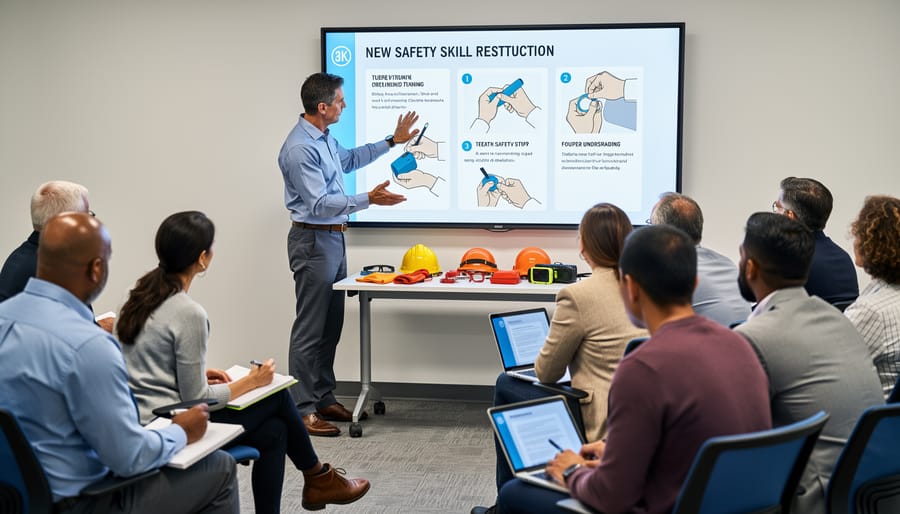
Direct instruction is when a teacher explains something clearly and shows how to do it. The instructor leads the session, breaking down information into manageable steps while learners watch and listen before practicing themselves.
This method works especially well when teaching new skills that need precise execution, think demonstrating how to operate machinery safely, explaining how to fill out government forms correctly, or walking through the steps of a clinical procedure. In workplace training, an experienced employee might demonstrate proper lifting techniques or show new staff how to complete a specific task. In literacy settings, an instructor might model how to sound out unfamiliar words or demonstrate effective note-taking strategies.
Direct instruction shines when learners need a clear foundation before trying something on their own. It gives everyone the same starting point and reduces confusion about what’s expected. Safety training particularly benefits from this approach because watching someone do it right first helps prevent costly mistakes. The key is keeping explanations simple, checking for understanding frequently, and moving to hands-on practice once learners grasp the concept.
Hands-On and Interactive Methods
Hands-on and interactive methods let learners practice skills in real situations rather than just hearing about them. In workplace training, employees might role-play customer service conversations or practice using new equipment under supervision. In literacy programs, learners work with actual job applications, forms, or community resources they’ll encounter in daily life, not just textbook exercises. Group problem-solving activities, like planning a community event together or troubleshooting a work process, help adults apply knowledge while learning from each other.
These methods work well for adult learners because they connect new skills to real experience. Adults often learn best when they can immediately see how something applies to their work, family, or community responsibilities. Practicing with actual materials and situations builds confidence and helps skills stick. The active involvement also keeps learners engaged longer than passive listening. Whether in a college classroom, a professional development workshop, or a community program, hands-on practice respects adults’ need to understand the practical purpose behind what they’re learning.
Collaborative Learning

Collaborative learning brings adult learners together in pairs or small groups to share knowledge and solve problems. In a peer tutoring session, an experienced worker might guide a new employee through safety procedures, or a strong reader might help a classmate practice sounding out words. Discussion groups let participants explore ideas together, whether that means analyzing a workplace case study, talking through a community issue, or sharing reading strategies that worked. Collaborative projects combine individual strengths: a team might research local resources, plan a presentation for their professional association, or create materials for a community event.
This approach values what adult learners already know from their jobs, families, and communities. Working together builds connections and reduces isolation, especially in settings where learners feel uncertain. Adults often learn effectively from each other because peers explain concepts in everyday language and share relatable examples. The method works well when participants feel safe contributing and when the task genuinely benefits from multiple perspectives.
Self-Directed and Independent Study
Self-directed learning lets adults take control of their own progress, working through materials at their own pace with support available when needed. This method works well for busy adults who need flexibility, someone might work through online modules during lunch breaks, complete workbook exercises at home in the evening, or pursue a personal learning project that connects to their job or interests. Examples include a healthcare worker completing safety certification modules online, a job seeker practicing resume writing with a structured workbook, or a professional building skills through self-paced courses. Teachers provide clear objectives, helpful materials, and check-in points, but learners decide when and how to engage. This approach respects that adults have responsibilities outside the classroom and often learn best when they can connect lessons directly to their goals. It builds confidence and independence while giving learners ownership of their education.
Technology-Supported Methods
Technology makes learning more flexible and engaging across many adult education settings. Technology-supported learning includes educational apps that let workplace trainees practice safety procedures at their own pace, video demonstrations that show step-by-step processes employees can replay as needed, and online modules that allow professionals to complete required training around their schedules. In literacy programs, learners use reading apps to build skills independently, while community health educators share video tutorials that families can watch at home. Digital practice exercises give instant feedback, helping adult learners in colleges and workplace training programs identify what they’ve mastered and where they need more support. The key is choosing accessible tools that match learners’ comfort with technology and providing clear guidance so digital methods support learning rather than creating barriers.
Where Instructional Methods Are Used
Instructional methods aren’t just for classrooms. They shape learning across a wide range of adult education settings, each with its own goals and challenges. Understanding where these methods apply helps educators see the bigger picture and adapt approaches from one context to another.
Adult learners encounter instructional methods in these settings:
- Literacy and basic skills programs helping adults improve reading, writing, and numeracy
- Workplace and corporate training teaching job-specific skills, safety procedures, and professional competencies
- Professional development sessions for educators, healthcare workers, and other professionals updating their practice
- Community education programs offering life skills, financial literacy, and personal development
- College and university continuing education serving mature students and career changers
- Health literacy and community health education helping people navigate medical information and wellness choices
- Newcomer and settlement programs supporting immigrants learning a new language and culture
A workplace trainer teaching forklift safety uses direct instruction and hands-on practice. A literacy tutor helping someone improve reading skills might draw on research about how the brain learns to read while using collaborative methods. A community health educator teaching diabetes management combines technology-supported resources with peer discussion. The methods overlap, but the context shapes how they’re delivered.
In Canada, these settings often intersect. A newcomer might attend ESL classes at a community college, workplace training at their job, and health literacy sessions through a settlement agency, experiencing different instructional approaches in each space. Recognizing this breadth helps educators learn from parallel fields and adapt what works across contexts.
Research-Based Approaches Shaping Current Practice
Educators today have more access to research about what works in teaching. Three key approaches are shaping how instructors make decisions across adult learning settings.
The Science of Learning draws on brain research and psychology to identify principles that help educators focus on what moves the needle for student learning. These principles apply whether you’re teaching workplace safety, computer skills, or reading comprehension. Common examples include spacing out practice over time rather than cramming, mixing different types of content in one session, and testing as a learning tool. The Science of Learning helps instructors in any setting make smarter choices about how to structure lessons.
The Science of Reading provides a research foundation that helps guide instructional decisions without replacing teacher expertise. While it emerged from literacy research, its emphasis on systematic, evidence-based approaches influences teaching across fields. Instructors in health education, professional training, and other areas now look for similar research backing for their methods.
The Scholarship of Teaching and Learning, or SoTL as systematic inquiry offers a framework for improving practice through structured investigation. College instructors, corporate trainers, and community educators use SoTL to test whether their methods actually work and refine them based on evidence.
Analyzing data and research-based strategies now forms a core part of professional learning. Educators across contexts review student performance data, try proven approaches, and adjust based on results. This shift puts research in service of practice rather than treating it as separate from real teaching.
Choosing the Right Methods for Your Learners
Selecting the right instructional methods starts with knowing your learners. What are their goals, earning a credential, improving job skills, building confidence reading with their kids? Their starting point matters too. Someone with strong verbal skills but limited reading experience needs different approaches than someone learning workplace procedures for the first time.
Consider practical realities. How much time do you have with learners? A one-hour weekly class demands different methods than a full-day workshop. What resources are available, technology, printed materials, space for group work? Be honest about constraints, then work within them.
Group size shapes your options. Direct instruction works well for large groups; collaborative activities shine in smaller settings. Think about your learners’ comfort level with different approaches. Some adults thrive in group discussions, while others need time working independently before they share.
Cultural backgrounds influence how people learn best. What feels supportive in one cultural context might feel uncomfortable in another. Inclusive education strategies help you respect diverse learning styles and experiences.
Start simple. Pick one new method that fits your situation and try it for a few sessions. Ask learners what’s working. Their feedback tells you more than any framework.
Most effective teaching mixes methods, some direct explanation, some hands-on practice, some collaboration. You’re not choosing one “right” approach; you’re building a toolkit that serves your specific learners in your specific context.
Free Resources and Support in Canada
Canada offers many free resources that help educators explore and improve their instructional methods across different adult learning settings.
Provincial literacy networks provide workshops, webinars, and resource libraries. These organizations often share lesson plans, teaching guides, and practical strategies you can use right away. Many offer both in-person and online sessions that fit around work schedules.
School districts and boards regularly host professional development sessions on teaching methods and evidence-based approaches. These workshops often welcome community educators and are designed for teachers at all experience levels. Check your local board’s website or ask at your community center about upcoming sessions.
Community colleges across Canada run free or low-cost workshops for adult educators. Topics often include working with diverse learners, using technology in teaching, and applying research findings to practice. Some colleges also share teaching materials and sample lesson plans through their libraries.
Organizations like Literacy Encyclopedia gather free resources specifically for adult education. You’ll find articles explaining teaching approaches in plain language, downloadable materials, and connections to other support networks.
Many resources include elementary-level materials that work well for foundational skills but can be adapted for other adult learning contexts. Start with one or two trusted sources, try what fits your situation, and build from there.
Instructional methods are flexible tools that help you meet adult learners where they are, whether you’re teaching in a literacy program, leading workplace training, facilitating community education, or working in higher education. No single method works for everyone or every situation. The most effective educators experiment with different approaches, reflect on what works, and adjust based on their learners’ needs and responses. Research frameworks like the Science of Learning and the Scholarship of Teaching and Learning can guide your decisions and help you focus your energy on what moves the needle for student learning, but they don’t replace your professional judgment and classroom expertise.
What is the best instructional method for adult learners?
There’s no single best method. The most effective approach depends on your learners’ goals, prior knowledge, learning preferences, and the skills you’re teaching. Most successful educators use a mix of methods.
How does research guide teaching without replacing teacher judgment?
Research provides a foundation that helps you make informed choices about instructional strategies, but you still decide how to apply those strategies based on your specific learners and context. Your classroom expertise matters.
Do instructional methods work the same way in all learning settings?
Core principles apply across settings, but you’ll adapt methods to fit your context. A hands-on approach in workplace training looks different from collaborative learning in a literacy class, even though both respect how adults learn best.
Every time you choose an instructional method thoughtfully and adjust it to serve your learners, you’re making a real difference in their success. Trust your expertise, keep learning, and remember that good teaching comes from caring about the people in front of you and giving them the tools they need to move forward.