Showing: 1 - 4 of 4 RESULTS
Blogs Literacy

What Is Evolutionary Psychology (and How Does It Work)?

Close-up portrait silhouette with subtle background imagery suggesting snake caution and sweet fruit cues, set against a blurred Canadian wilderness scene.

Evolutionary psychology is the study of how human thoughts, feelings, and behaviours developed over thousands of years to help our ancestors survive and reproduce. This field explains why we act the way we do today by looking at the challenges early humans faced, like finding food, staying safe, and forming relationships. Understanding evolutionary psychology can help you make sense of everyday behaviours, from why we crave sweet foods to why we form close friendships.
This article will explain what evolutionary psychology is, how it works, and how it applies to daily life. You’ll learn about the main ideas in this field …

“An adult educator collaborates with diverse adult learners at a classroom table using printed materials and a laptop.”
Adult Basic Literacy Resources Blogs Literacy

What Are Instructional Methods for Teaching (and How Do They Work)?

Instructional methods for teaching are the specific strategies and techniques educators use to help students learn, understand, and apply new knowledge and skills. These methods range from direct instruction and hands-on activities to collaborative group work and technology-enhanced learning, each designed to meet different learning needs and contexts.
Choosing the right instructional approach matters because it shapes how effectively students grasp new concepts, stay engaged, and build confidence. For adult learners working on literacy fundamentals …

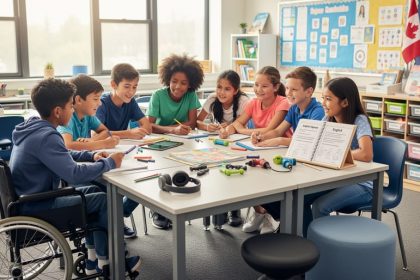
Diverse students collaborate together at a classroom table with accessibility supports that help everyone participate in learning.
Adult Basic Literacy Resources Blogs Literacy

What Is Inclusive Education? (And How It Works)

Inclusive education means all students learn together in the same classroom, regardless of their abilities, backgrounds, or needs. Every child belongs, participates, and receives the support they need to succeed alongside their peers. This approach removes barriers and creates learning environments where differences are valued, not separated.
For adult learners, educators, and literacy workers across Canada, understanding inclusive education matters now more than ever. Classrooms in 2026 reflect growing diversity, with students bringing different learning styles, languages, physical abilities, and life experiences. Inclusive …

“Adult learner’s hands sorting coins and small counting blocks into grouped stacks to represent place value.”
Adult Basic Literacy Resources Literacy

How to Teach Place Value: Clear Steps for Adult Learners and Educators

Place value is the foundation of our number system, and you can learn or teach it effectively using hands-on materials like base-ten blocks, bundling sticks, or even everyday items like beans and cups. Whether you’re an adult learner building your own math confidence or an educator guiding others, the key is making the abstract concept concrete: understanding that the digit 7 in 372 represents 70, not just 7, because its position gives it meaning.
Many adults struggle with place value simply because they memorized procedures without grasping why numbers work the way they do. When you can physically group ten ones into a ten, …