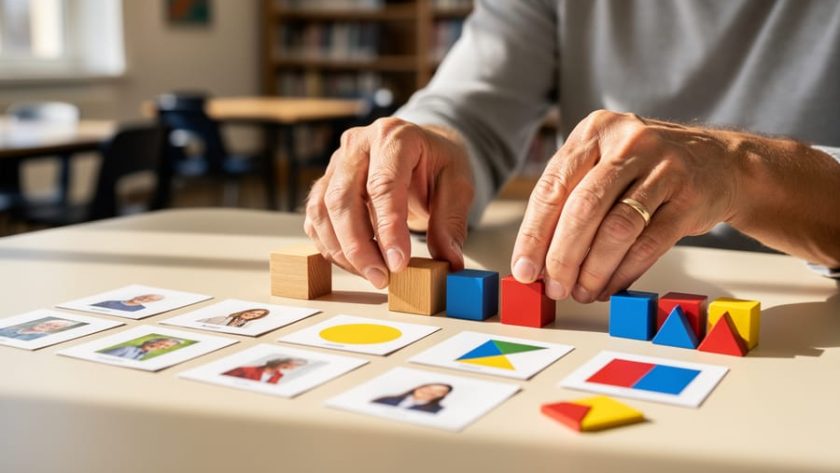
Learning materials designed for three-year-olds can be powerful starting points for adult elementary learners when adapted thoughtfully. The connection works because both groups benefit from visual learning, hands-on activities, clear repetition, and bite-sized lessons that build confidence through small wins. The key difference lies in the presentation: adults need materials that respect their life experience and dignity while still delivering the same foundational concepts in literacy, numeracy, and problem-solving.
This approach makes sense for several reasons. Three-year-old learning materials strip concepts down to their simplest form, use engaging visuals, and repeat ideas in different ways without overwhelming the learner. These same principles help adult learners who are building basic skills but need content that acknowledges their maturity and real-world knowledge.
Many free Canadian resources support both early childhood education and adult literacy using similar teaching methods. Public libraries across Canada offer programs and materials that bridge these worlds, recognizing that clear, accessible instruction works regardless of age. Community organizations and provincial literacy programs provide workbooks, apps, and guided activities that share the directness of preschool materials but frame them for grown-up contexts like workplace skills, family communication, and everyday tasks.
The trick is adapting rather than adopting. Taking a colour-recognition activity and turning it into a workplace safety lesson, or transforming a counting game into a budgeting exercise, preserves the learning power while honouring adult learners’ goals and self-respect.
What Makes 3-Year-Old Learning Materials So Effective
Materials designed for 3-year-olds work because they strip learning down to its essentials. These resources focus on one concept at a time, present information clearly, and repeat ideas until they stick. Adult learners at elementary levels need exactly the same approach, not because they think like children, but because effective teaching for beginners follows universal principles.
The core features that make early childhood materials successful include:
- Clear, simple language with one idea per instruction
- Large, bold visuals that support the text rather than distract from it
- Repetition that builds confidence through practice
- Hands-on activities that make abstract concepts concrete
- Immediate feedback showing what’s right or wrong
- Short lessons that prevent overwhelm and maintain focus
When you start learning to read at any age, you need to see letters clearly, hear sounds distinctly, and practice forming connections between them. A 3-year-old learning the letter A and an adult learning the same letter both benefit from big, clear print and multiple chances to trace, say, and recognize that letter. The brain builds these foundational pathways the same way regardless of age.
Visual support matters enormously for new learners. Pictures alongside words help your brain create memory hooks. If you see the word “cat” next to a cat image dozens of times, that connection strengthens. This isn’t childish, it’s how memory works. Many effective J learning methods for adults incorporate similar visual reinforcement strategies.
Repetition gets dismissed as boring, but it builds automaticity. Reading “the,” “and,” and “is” hundreds of times makes these words instant and effortless, freeing your brain to focus on new words. Early childhood materials understand this and build in natural repetition without making it feel mechanical.
The hands-on element transforms passive viewing into active learning. Tracing letters, sorting picture cards, or matching words to objects engages multiple senses. Your muscles remember shapes, your eyes track patterns, and your brain links everything together. This multi-sensory approach accelerates learning for everyone starting from the beginning.
Skills That Match Across Ages

Letter and Sound Recognition
Learning to connect letters with their sounds is fundamental for reading, and alphabet materials created for young children offer clear advantages for adults starting their literacy practice. These materials break the alphabet down into manageable pieces, introducing one or two letters at a time with strong visual support. Flashcards showing both upper and lowercase letters alongside pictures help create mental connections between symbols and sounds.
Simple phonics workbooks designed for early learners follow the same phonological awareness milestones that adult learners need: recognizing individual letter shapes, matching sounds to letters, and blending sounds together. The repetitive practice built into these materials reinforces learning without overwhelming beginners.
Adult learners benefit from tracing activities, sound-matching games, and picture-word associations just as young children do. The difference lies in choosing content that relates to adult life. A worksheet practicing the letter B works equally well whether it features ball and banana or bill and bank. The teaching method stays effective while the context shifts to match adult experiences and interests.
Number and Counting Basics
Numbers are just symbols representing quantities, and learning to recognize them starts the same way whether you’re three or thirty. Simple counting tools work because they connect a visual symbol (like “3”) with a concrete amount you can see and touch.
Start with numbers 1 through 10. Tracing number shapes builds memory just as effectively for adults as for children. The physical act of forming each digit helps your brain remember it. Use anything countable around you: coins, buttons, or dried beans. Place three coins on the table, point to the numeral 3, and say it aloud. This multi-sensory approach strengthens connections.
Number lines showing quantities in sequence help you see relationships between numbers. A simple line marked 0 to 10 with dots or blocks underneath each number shows that 5 comes after 4 and contains one more item.
Don’t skip counting aloud. Speaking numbers while pointing to objects connects the spoken word with the written symbol and the actual quantity. This triple reinforcement builds solid foundations for later math skills like addition and budgeting.
Adapting Young Learner Materials for Adult Dignity
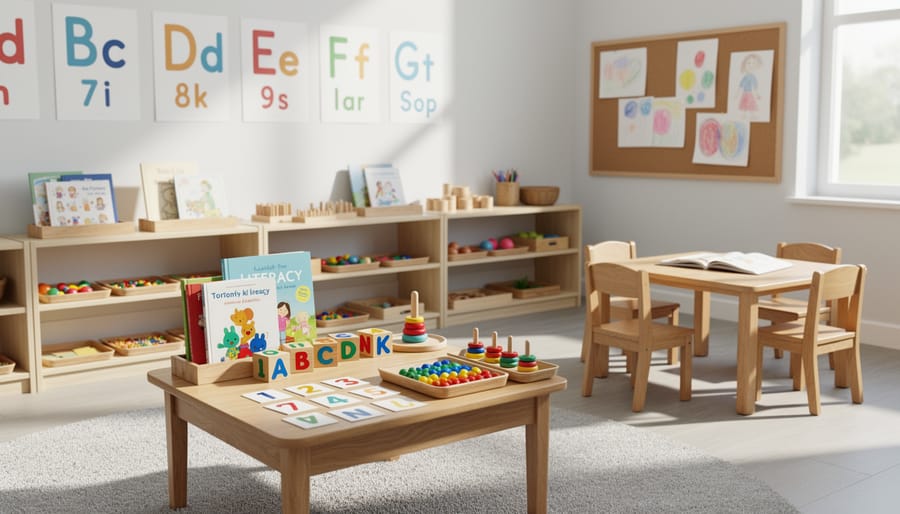
The simplest materials work best when they’re presented with respect. Adult learners deserve learning tools that acknowledge their life experience and intelligence, even when starting with basic content. Here’s how to use child-focused materials effectively while maintaining dignity.
Change the Context, Keep the Content
A counting worksheet featuring teddy bears becomes powerful when you replace those bears with grocery items, bills, or measuring cups. The skill being practiced stays the same, but the context shifts to adult daily life. Take alphabet flashcards and add relevant words: A for “appointment,” B for “bill,” C for “call.” The simple format remains effective while the examples connect to real adult situations.
Remove Visual Elements That Don’t Serve Learning
Cartoon characters and bright primary colors aren’t necessary for effective learning. You can cover or ignore decorative images on worksheets and focus on the actual content. Many literacy programs photocopy only the relevant portions of children’s workbooks, cutting out the helpful practice sections without the childish borders or characters.
Frame Activities as Skill-Building, Not Play
The same matching game that helps a three-year-old recognize letters helps an adult learner too. Present it as “letter recognition practice” rather than a game. Explain why you’re using simple materials: “We’re building foundational skills using the clearest examples available.” Most adult learners appreciate honesty about why certain materials work.
Let Learners Choose Their Materials
Some adults feel comfortable with any effective resource. Others prefer materials that look more mature. Offer options when possible and let learners select what works for them. A person who chooses a simple workbook themselves feels empowered, not diminished.
Focus on Progress, Not Packaging
Remind learners that using basic materials shows strength, not weakness. Starting with clear, simple resources means building a solid foundation. Professional athletes practice basic movements daily. Adult learners practice basic skills the same way.
Free Resources Available in Canada
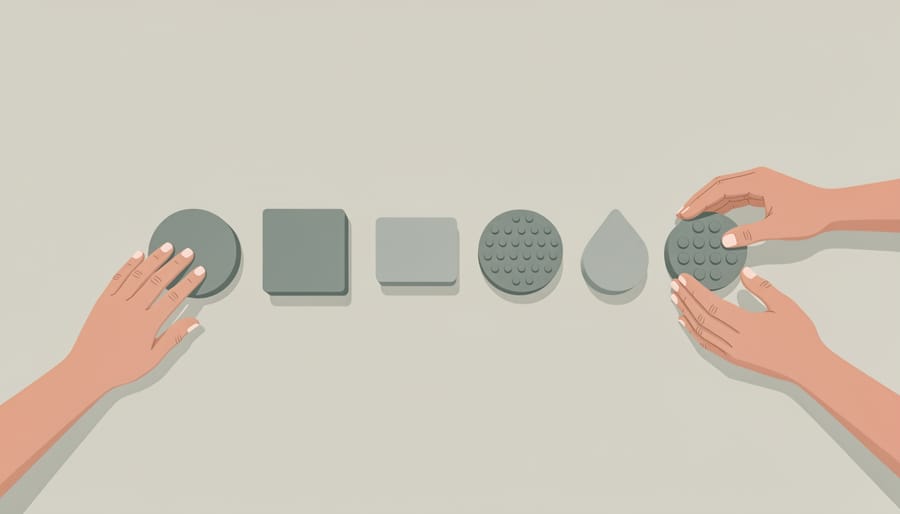
Canada offers several excellent free resources that use the same clear, simple approach you find in early childhood materials, but designed with adult learners in mind.
ABC Life Literacy Canada provides free downloadable workbooks and learning guides through their website. Their materials focus on real-world skills like reading signs, filling out forms, and understanding basic instructions. Everything is available at no cost, and you can print what you need at home or at your local library.
Many public libraries across Canada run free adult literacy programs with materials designed for absolute beginners. Check your local library’s website or call to ask about their adult learning resources. Most libraries also offer free library cards that give you access to online learning platforms like Tumblebooks and Reading Eggs, which start at very basic levels.
Provincial literacy organizations offer region-specific free resources. For example, Literacy Nova Scotia, ABC Life Literacy, and Community Literacy of Ontario all maintain resource libraries you can access online without paying anything. These materials use simple words, clear pictures, and step-by-step lessons similar to what works for young children but with adult-relevant content like job applications, health information, and household tasks.
AlphaPlus provides free digital learning tools specifically for adult learners in Canada. Their resources include interactive exercises starting at letter recognition and basic phonics, progressing at your own pace.
For those interested in teaching simple English skills to others, exploring English teaching opportunities can provide valuable perspective on breaking down language into its most basic, learnable parts.
All these resources respect adult learners while using proven simple teaching methods that actually work.
When to Use Child-Style Materials and When to Avoid Them
Child-style materials work best when you’re building foundational skills from scratch. If you’ve never learned to read, materials that teach letter sounds, simple words, and basic patterns serve you well regardless of how they look. The same applies to counting, basic math operations, or recognizing shapes and colors. When the content itself is genuinely elementary, simple presentation helps rather than hinders learning.
| Use Child-Style Materials When | Use Adult-Specific Materials When |
|---|---|
| Learning alphabet and letter sounds | Reading about workplace safety or job applications |
| Practicing basic counting and number recognition | Understanding budgets, bills, or banking |
| Building phonics skills in private study | Working in group learning settings |
| Focusing purely on skill mechanics | Learning content tied to adult responsibilities |
Avoid child-style materials when the learning connects directly to adult life contexts. Reading a rental agreement, filling out government forms, or understanding medication labels requires materials that show real documents and situations. Job-related learning also needs adult context because you’re not just learning to read, you’re learning to read specific things that matter in your daily life.
Group settings require more sensitivity. What works well for private study at home might feel uncomfortable in a classroom with other adults. Some learners feel fine using any material that helps them learn. Others prefer materials that look professional and age-appropriate. Respect individual preferences and offer choices whenever possible. The goal is effective learning in an environment where everyone feels respected and comfortable.
Creating Your Own Simple Learning Materials
Making your own learning materials puts you in control and costs almost nothing. You’ll use the same simple, clear approach found in early childhood materials but with topics that matter to adults.
Start with flashcards for words you need daily. Cut paper or cardboard into rectangles. Write one word on each card in large, clear print. On the back, draw a simple picture or write the word in a sentence. Focus on words you see around you: “exit,” “open,” “push,” “bus,” “stop.” Keep five to ten cards together with an elastic band.
Create a personal word wall using sticky notes or index cards. Write words you’re learning on separate cards and stick them around your space where you’ll see them often. Put “mirror” on your bathroom mirror, “door” beside your door, “fridge” on your refrigeridge. Seeing words in context helps your brain connect the letters to real objects.
Make a number practice sheet that relates to your life. Draw or print pictures of items you buy regularly. Write the prices underneath. Practice reading numbers, adding totals, or figuring out change. Update it with current prices from flyers to keep it relevant.
Build a sentence maker using strips of paper. Write common words on separate strips: “I,” “go,” “to,” “work,” “store,” “home,” “today.” Arrange them in different orders to practice reading and writing sentences. Add new word strips as you learn them.
Keep materials in a folder or box you can grab easily. Making your own tools means you practice exactly what you need, exactly when you need it.
Starting with simple, clear materials isn’t a weakness, it’s smart learning strategy. Every successful learner begins somewhere, and using materials that break concepts into manageable pieces helps you build solid foundations. Whether you’re working with picture cards, basic phonics tools, or counting exercises, what matters is that you’re learning and moving forward.
Adult learners deserve the same clarity and directness that makes early learning materials so effective. There’s no shame in using simple tools when they work. The goal is understanding and progress, not impressing anyone with complicated textbooks that slow you down.
Educators supporting adult learners can adapt elementary lesson plans to meet students where they are. Focus on what helps your learners succeed, not what looks sophisticated.
Canada offers excellent free resources designed specifically for adult literacy development. Provincial literacy organizations, public libraries, and community programs provide materials and support at no cost. You don’t need expensive resources to make real progress, just commitment and the right approach for your learning needs. Start simple, stay consistent, and celebrate every step forward.